
 By
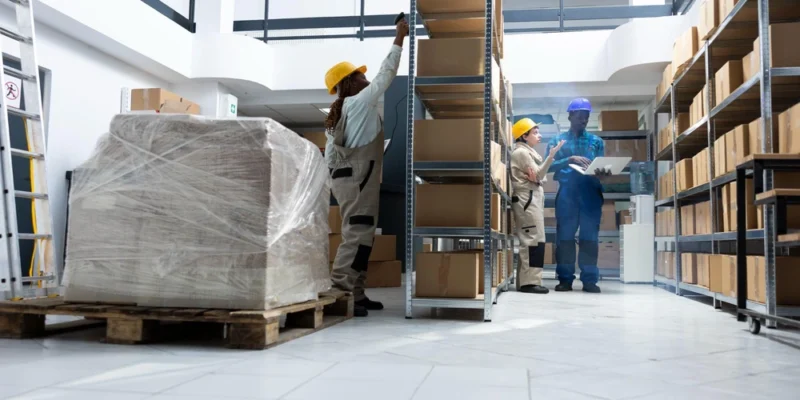
Picture a lorry navigating a winding country lane, carrying dozens of heavily stacked pallets. Without proper security, those cartons shift, slide, and eventually collapse, turning valuable inventory into a total write-off. Supply chain professionals face this exact nightmare every single day. Ensuring load integrity isn’t just about wrapping plastic around a few boxes; it forms the backbone of efficient, safe logistics. Effective stretch wrapping dramatically transforms how cargo survives the bumps, turns, and long periods in static warehouse storage.
The Hidden Mechanics of Film Tension
When operators apply elastic film around a pallet, they aren’t just covering the goods to keep dust away. They trigger powerful mechanical forces that lock individual items into a single, cohesive unit. Modern stretch wrapping relies heavily on containment force-the combination of film layer count and wrapping tension. This force pushes inward against the load, counteracting the natural gravitational forces that cause stacks to lean or split.
Without adequate containment force, vibrations during lorry transit quickly loosen loose boxes. Think of film tension as a persistent, protective hug that constantly adapts to slight movements in the stack. When warehouse teams stretch the plastic correctly, the film retains a natural memory, pulling back against the cargo to maintain tight structural integrity over long journeys across bumpy motorways.
Navigating the Bumps: Survival in Transit
Transit introduces unpredictable dynamic forces including sudden stops, sharp cornering, and harsh vibrations. An unstable pallet load transforms into a severe safety hazard the moment a delivery driver hits the brakes. High-quality stretch wrapping creates a unified structure that distributes kinetic energy across the entire pallet rather than letting individual boxes absorb the impact alone.
Logistics managers frequently combine different packaging techniques to manage exceptionally heavy or top-heavy stock. For example, applying a heavy-duty strapping machine secures the core load to the wooden base, whilst film secures the outer surfaces. Combining these methods ensures that heavy industrial parts or awkward containers remain anchored to the pallet floor, preventing dangerous tipping incidents inside shipping containers or haulage trailers.
Static Saviours: Preventing Warehouse Slump
Load stability issues don’t only happen while trucks travel down the highway. Static warehouse storage presents its own set of quiet, destructive challenges. When workers stack pallets three or four levels high in high-bay racking, immense downward pressure forces lower cartons to bulge or buckle over time. Logistics experts call this phenomenon “pallet slump.”
Proper wrapping techniques eliminate static displacement by reinforcing the vertical corners of the stack. The film acts like an external skeleton, holding carton edges rigid even when humidity levels fluctuate inside large storage facilities. By maintaining straight sides and precise alignment, wrapped loads prevent catastrophic rack collapses and allow warehouse staff to utilise vertical storage space safely and confidently.
Smart Wrapping Strategies for Maximum Defence
Achieving total load stability requires more than pulling plastic film around a pallet at random. Logistics teams must tailor their wrapping parameters to match the specific characteristics of their stock. Using a dedicated strapping machine to bundle loose components before applying film provides an extra layer of structural integrity for irregular items.
To ensure your cargo arrives in flawless condition every single time, packaging operators should always consider three essential variables:
| Wrapping Variable | Operational Focus | Primary Benefit |
| Pallet-to-Load Lock | Overlapping film at least 75mm over the wooden base | Anchors cargo directly to the pallet to stop sliding |
| Pre-Stretch Ratio | Elongating film between 150% and 300% before application | Increases film strength while using significantly less material |
| Top-Sheet Coverage | Adding a protective plastic sheet across the upper surface | Shields inventory against moisture, dust, and top-layer shifting |
A well-optimised wrapping routine reduces material waste, lowers transport costs, and prevents costly customer returns caused by transit damage.
Secure Your Logistics Success
Unstable loads cost businesses thousands of pounds every year in damaged goods and lost time. Optimising your packaging line with high-performance machinery, reliable film, and robust strapping equipment ensures your products reach their destination intact every time.
Frequently Asked Questions
Why does a load shift even after wrapping?
Loads usually shift because the operator failed to lock the film to the wooden pallet base, or because the containment force was too low for the load’s total weight.
Can I use a strapping machine instead of stretch wrapping?
A strapping machine excels at securing heavy, rigid items directly to pallets, but it doesn’t protect against weather or small item displacement. Combining both methods offers the ultimate load protection.
How do I know if my containment force is correct?
You can measure containment force using a specialised pull-gauge tool at the top, middle, and bottom of your wrapped pallet to ensure consistent tension throughout.
Contact Sunstream Industries today to discover industry-leading packaging solutions tailored to your business needs!










Comments